Purple Locksmith NYC Service Team
Local locksmith team
May 4, 2026 11 min read

If you've ever wrestled with a sticky door knob lock on your way out the door — rattling the handle, jiggling the key, shouldering the door frame — you already know how fast a minor annoyance can become a genuine problem. In New York City's older apartment buildings, this is one of the most common calls we receive, and it's almost never random. Sticking knob locks have real, diagnosable causes, and most of them get worse over time if left alone.
This guide walks you through exactly why your lock door knob is binding, what you can do about it right now, and how to tell when the hardware has lived its useful life. We'll also cover when a professional locksmith — particularly one experienced with mortise lock systems common throughout pre-war and mid-century NYC buildings — is the right call instead of a DIY fix.
## Why Door Knob Locks Stick: The Real Culprits in NYC Apartments
A door knob lock doesn't just start sticking for no reason. In New York City specifically, a handful of conditions conspire against your hardware in ways that wouldn't affect a home in a newer suburb. Pre-war buildings in neighborhoods like Washington Heights, Astoria, and Crown Heights shift seasonally — the wooden door frames expand in summer humidity and contract in winter dry heat, which changes the alignment between the latch bolt and the strike plate by as much as a quarter inch over time. That misalignment puts side-load stress on the knob mechanism every time the door closes, grinding the internal parts prematurely.
Beyond frame movement, the other major culprits are dried-out internal lubrication, worn or corroded latch bolts, and loose set screws inside the knob assembly itself. If your building was last renovated before 1990, there's a real chance the knob lock you're fighting with has never been serviced. Decades of accumulated dust, paint overspray from sloppy hallway touch-ups, and the general grit of city living work their way into the cylinder and the latch mechanism — turning what was once smooth into something that fights back every time you turn the key.
## How to Diagnose Your Sticking Door Knob Lock Before Reaching for the Phone
Start with the latch, not the cylinder. Close your door slowly and watch whether the latch bolt slides cleanly into the strike plate or catches on the edge. If it catches, your problem is alignment, not the lock itself — and you may be able to correct it by tightening the hinge screws or using a chisel to slightly enlarge the strike plate opening. Next, remove the knob (usually held by a small set screw on the neck or a hidden release pin) and inspect the spindle and latch assembly for visible rust, cracked plastic cam pieces, or a broken return spring. A latch that retracts manually but doesn't spring back on its own points to a failed spring inside the chassis — a part that costs very little but almost always means replacing the full knob unit, since most residential knob locks aren't designed to be rebuilt at the component level.
The cylinder is a separate diagnostic step. Insert your key slowly and note whether resistance happens at the top of the turn, the bottom, or throughout. Resistance at a specific point usually means a worn or bent key, a single seized pin stack inside the cylinder, or a buildup of old lubricant that has congealed into a paste. Spray a small amount of dry PTFE lubricant (not WD-40, which attracts dust) into the keyway, work the key in and out a dozen times, and test again. If the sticking improves but returns within days, the cylinder has reached the end of its service life. If nothing improves, or if the key suddenly stops turning entirely, that's the moment to call a professional — trying to force the cylinder risks snapping a key inside it, which turns a manageable repair into a full extraction job.
## Mortise Lock vs. Knob Lock: Knowing Which System You Actually Have
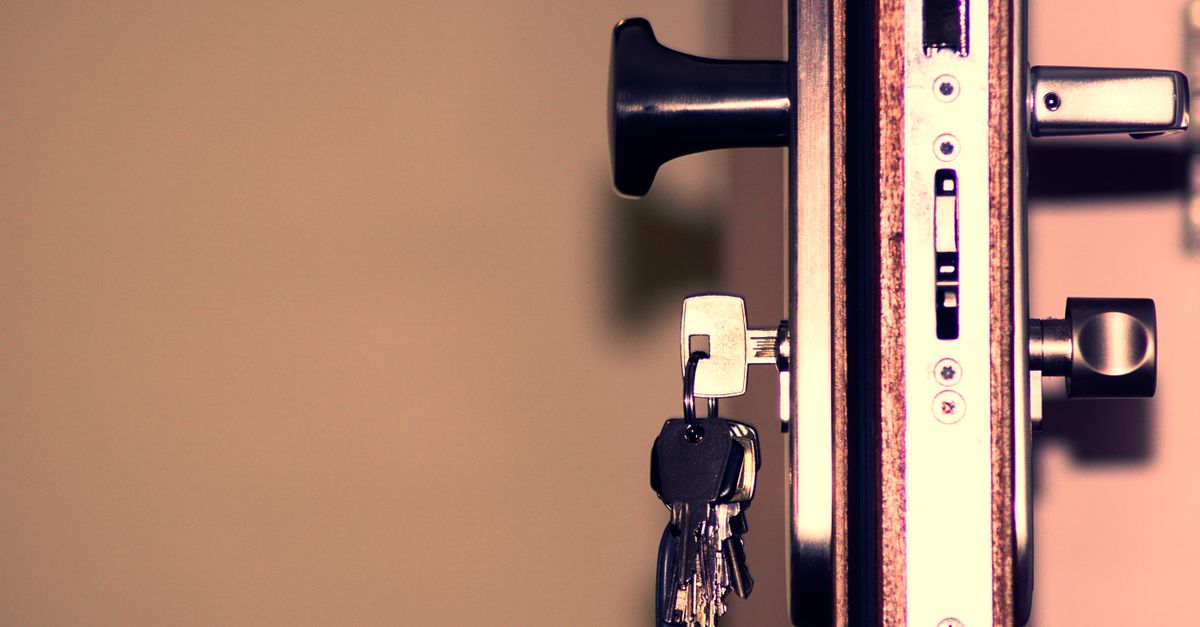
Many NYC residents don't realize their apartment door uses a mortise lock body — not just a knob lock — until something goes wrong with it. A mortise lock is a full rectangular cartridge installed inside a pocket (the mortise) cut into the door's edge. It typically operates the latch and the deadbolt through a single unified mechanism, and it's the standard in pre-war buildings throughout Manhattan, Brooklyn, and the Bronx. The knob or lever you turn on the outside is simply the trim — the actual work happens inside that cartridge. This distinction matters enormously for repairs: what looks like a sticky knob lock from the outside may actually be a failing mortise lock body, a worn cam, or a broken tailpiece inside the door.
Mortise lock service is a core specialty at Purple Locksmith NYC. These systems require a different skill set than swapping out a standard cylindrical knob lock, and an inexperienced attempt to pull and reinstall a mortise cartridge can leave your door non-functional. Our experienced locksmiths carry common mortise lock bodies and cylinders on every service vehicle so repairs can be completed in a single visit — no waiting for a part to be ordered. If you're not sure which system your door uses, a quick look at the edge of your door (face plate) will tell you: a narrow rectangular plate with both a latch and a deadbolt in one strip means you have a mortise lock. A round latch hole only usually means a cylindrical knob lock. When in doubt, call us at 929-531-6918 and we can walk you through it before we even dispatch.
## When It's Time to Replace (or Rekey) Your Knob Lock
There's a practical threshold for repair versus replacement, and it comes down to the cost and availability of parts versus the value of fresh security. A knob lock that is sticking because of frame misalignment and dried lubricant is a candidate for service and correction — the hardware itself may have years of life left. A knob lock with a corroded latch bolt, a cracked chassis, worn keyway warding, or a cylinder that no longer operates smoothly after proper lubrication is a replacement candidate. In NYC rental units, landlords are legally responsible for functional locks under the Housing Maintenance Code, but tenants often find it faster to handle minor hardware issues directly — keep your receipts if you do.
Two situations call for professional involvement immediately: if you want to know how to rekey a lock rather than replace it (typically the right move after a break-in, a lost key, or a change in roommates), or if you're considering upgrading to a higher-security cylinder or a smart knob lock. Rekeying changes the internal pin configuration so your old keys no longer work — it costs less than full replacement and takes a skilled locksmith about ten minutes per cylinder. If you've recently moved into an apartment in Bushwick, Jackson Heights, or any dense neighborhood where you can't be sure who held keys before you, rekeying is the single highest-value security step you can take. For landlords and building managers, this also connects to commercial locksmith services — master key systems, building-wide rekeying, and high-security hardware installs are all part of what our team handles across the five boroughs.
## Emergency Locksmith Help, NYC Locksmith Costs, and What to Expect from Purple Locksmith NYC
How much does an NYC locksmith cost? It's one of the most common questions we hear, and the honest answer is: it depends on specific factors, not a flat number. How much does a local locksmith charge? The final quote is shaped by the type of lock (a standard knob lock costs less to service than a mortise lock with a specialty cylinder), the time of day (a 3 a.m. call is an emergency locksmith visit with different resource demands than a Tuesday afternoon appointment), your location within the metro area, and whether any parts need to be replaced. What is the average call out fee for a locksmith — and how much should an emergency locksmith cost? These are fair questions, and we answer them directly: before any work begins, our locksmith confirms an exact up-front price with you. There are no surprise charges added after the job is done. How much does an emergency locksmith cost near me? With a mobile team covering all five boroughs and surrounding areas, we come to you — and the same pricing transparency applies whether you're in Midtown or Maspeth.
Does NY require a locksmith license? New York State does not currently have a statewide locksmith licensing requirement, but New York City does require locksmiths operating within city limits to hold a NYC Department of Consumer and Worker Protection license — a meaningful consumer protection that filters out unqualified operators. Our team is insured, trained to professional standards, and operates fully within NYC regulations. We provide services including: residential knob lock and deadbolt repair, full mortise lock service and replacement, emergency locksmith response 24/7, lock rekeying (including how to rekey a lock for multi-unit buildings), high-security cylinder upgrades (Schlage, Kwikset, Medeco-compatible), master key system design, commercial locksmith services for offices and retail, access control system installation, smart lock installation and programming, keypad door lock programming and code changes, car lockout service, automotive key cutting and programming, transponder key replacement, broken key extraction (door and ignition), door frame and strike plate repair, mailbox lock replacement, storage unit lock service, padlock cutting and replacement, safe opening and combination changes, garage door lock service, building intercom and buzzer lock coordination, window lock installation, sliding door lock repair, and after-hours emergency response for both residential and commercial properties — all across New York City. Whether it's a sticky knob lock in a Queens walkup or a full mortise lock overhaul in a Manhattan brownstone, our mobile locksmiths arrive equipped to handle it in one visit. Call 929-531-6918 — we answer 24/7, every day of the year, with no answering service in between.
Frequently asked questions
Can I fix a sticking door knob lock myself, or do I need a locksmith?+
Many sticking knob locks can be improved with dry PTFE lubricant and a quick check of the strike plate alignment — both legitimate DIY steps. However, if the key is turning hard throughout its full arc, if the latch bolt is visibly corroded or cracked, or if your door uses a mortise lock body rather than a standard cylindrical knob lock, professional service is the smarter call. Forcing a worn mechanism risks snapping a key in the cylinder, which adds a more expensive extraction step to what started as a simple repair.
How to pick a door knob lock if I'm locked out — should I try it myself?+
We'd steer you away from attempting to pick or bypass your own lock. Beyond the risk of damaging the cylinder, it can draw unwanted attention in a New York apartment building, and even a successful attempt on a worn lock can leave the cylinder in worse shape than before. The safer and faster path is to check for a spare key with a neighbor or building super first, and then call a professional locksmith. Our team can reach most NYC locations quickly and will verify ownership before any work begins — it's a straightforward process and far less stressful than a DIY bypass attempt.
What's the difference between rekeying and replacing a door knob lock, and which one do I need?+
Rekeying changes the internal pin tumblers inside your existing cylinder so that old keys no longer work — it's the right move after a lost key, a roommate change, or moving into a unit where you can't account for all previous keys. Replacing the full knob lock makes more sense when the hardware is worn, damaged, or a security upgrade is the goal. Rekeying is typically faster and less involved than a full replacement, but both services can usually be completed in a single visit by an experienced locksmith. If you're unsure, describe what you're seeing and we can recommend the right approach before we arrive.
How much does an emergency locksmith cost in NYC, and what affects the price?+
There's no single flat rate for emergency locksmith service in New York City — the final price depends on several real factors: the type of lock involved (a standard door knob lock is different from a mortise lock or a high-security cylinder), the time of the call (late-night and weekend visits carry different resource demands), your location within the five boroughs, and whether any parts need to be supplied on the spot. What we guarantee is that your locksmith will confirm an exact price before any work begins — no estimates that balloon after the job is done. Call 929-531-6918 to get a straight answer for your specific situation.